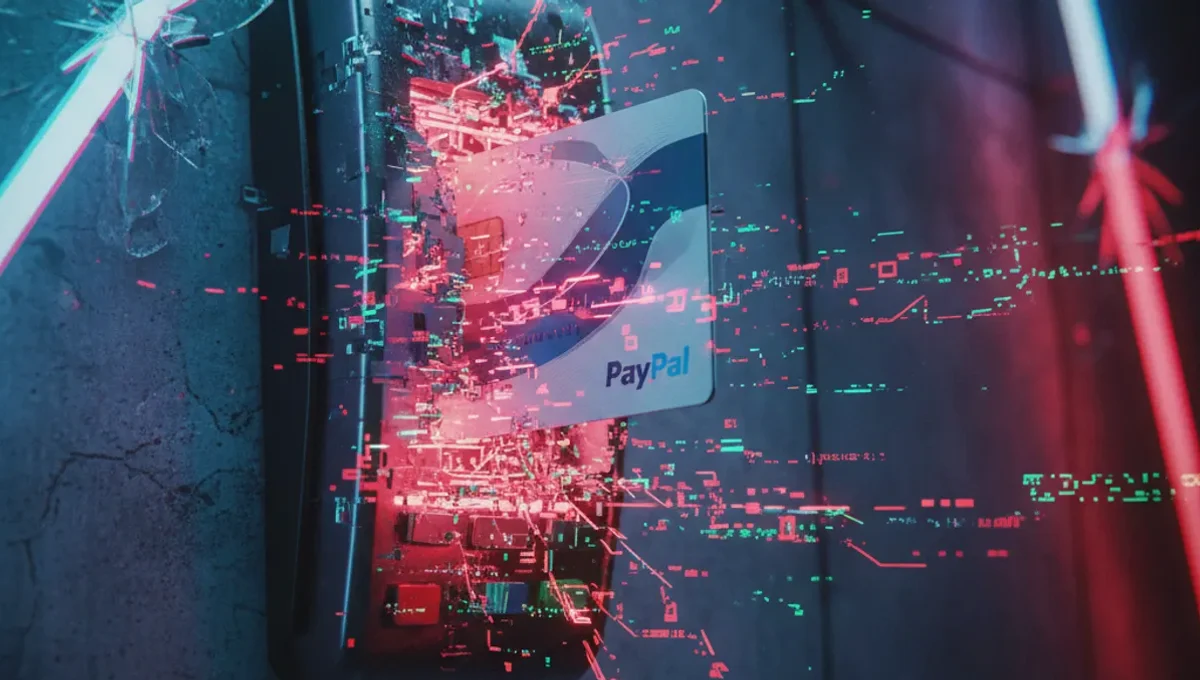
Why PayPal Cannot Function on the Deep Web
PayPal requires real identity verification, a linked bank account or credit card, and a phone number tied to your legal name. The entire system is designed around knowing who you are and being able to reverse transactions if fraud occurs. When someone claims to offer PayPal services through a .onion address or Tor hidden service, they are either running a phishing clone designed to steal your login credentials, or they are offering to transfer money from stolen accounts.
The deep web itself is not a payment system. It is a network accessed through Tor that obscures your IP address and location. PayPal operates on the surface web and requires you to log in through their official website or app. Logging into your real PayPal account through a hidden service address exposes your credentials to the person running that service. Even if the interface looks identical to PayPal's real login page, you have just given your username and password to a criminal.
Common PayPal Scams on Hidden Forums
The most frequent scam involves someone posting that they will sell you a PayPal account with a balance, or that they will transfer money to your account for a fee. Here is how the transaction typically unfolds:
- You contact the seller and agree on a price
- They ask you to send cryptocurrency first as a deposit or full payment
- They provide you with login credentials or promise a transfer
- The account either does not exist, the credentials are fake, or the money never arrives
- When you try to dispute the transaction on the forum, the seller has already disappeared or claims you did not follow instructions
Another variant involves someone offering to help you "recover" a PayPal account or "unlock" frozen funds. They ask for your real PayPal email, security questions, or a verification code sent to your phone. They then lock you out of your own account and drain any linked bank account or credit card. This is not a deep web specific problem, but deep web forums are where these predators advertise because the audience is less likely to report them to law enforcement.
Stolen PayPal Accounts and the Resale Market
Some sellers on deep web forums do have access to real PayPal accounts that they have stolen through phishing, malware, or credential stuffing attacks. They resell these accounts at a fraction of the balance. A PayPal account with a 500 dollar balance might be sold for 50 to 100 dollars in cryptocurrency.
Buying a stolen account is illegal in most jurisdictions. It constitutes receiving stolen property and potentially money laundering. PayPal's fraud detection systems flag unusual login locations and spending patterns within minutes. The account will be frozen, the funds recovered by PayPal, and the original owner will be refunded. You will have paid for access to an account you cannot use, and you will have created a record of a cryptocurrency transaction that law enforcement can trace back to you if they investigate the theft.
How Phishing Clones Exploit PayPal's Name
A phishing clone is a fake website or .onion address that mimics PayPal's login page so closely that you cannot tell the difference at a glance. These are hosted on hidden services and advertised on deep web forums as "PayPal deep web access" or "anonymous PayPal transfers."
When you enter your credentials, the attacker captures them and immediately logs into your real PayPal account on the surface web. They change your password, add a new email address as a recovery option, and link a new bank account or payment method. By the time you realize what happened, they have already transferred your balance or used your linked bank account to make purchases.
The best defense is to never log into PayPal through any link you find on a forum or in a message. Always type PayPal's official URL directly into your browser address bar. Enable two-factor authentication on your PayPal account so that even if your password is compromised, an attacker cannot log in without your phone. Use a password manager to generate a unique, long password that you do not type manually anywhere.
Reality: What Actually Happens in These Transactions
According to Tor Project documentation on hidden service security, phishing and credential theft remain the most common attacks against users of onion services. This matters because it shows that the deep web environment itself does not protect you from fraud; it actually concentrates it in one place.
Court records from law enforcement actions against deep web marketplaces show that payment disputes were among the most common complaints from users. Escrow systems on closed markets like Silk Road operated by holding cryptocurrency in a third-party account until both buyer and seller confirmed the transaction. Even with escrow, users lost money because the marketplace operator could exit scam, or because the seller could claim non-delivery and the marketplace moderator could rule in their favor.
PayPal transfers cannot be made anonymous because PayPal itself requires identity verification. If you send money through PayPal to someone on the deep web, PayPal has a record of the transaction, the recipient's account details, and your account details. Law enforcement can subpoena this information. The claim that PayPal transfers are untraceable is false and has led to prosecutions of people who believed they were conducting anonymous transactions.
Legitimate Payment Methods for Deep Web Transactions
If you are conducting a legal transaction on the deep web, such as purchasing privacy tools, books, or services from vendors who operate there, the standard payment method is cryptocurrency, typically Bitcoin or Monero.
Cryptocurrency transactions are pseudonymous, not anonymous. Your wallet address is public, but it is not directly tied to your identity unless you link it yourself. To maintain privacy, best practices include:
- Using a separate wallet for each transaction
- Mixing or tumbling cryptocurrency through multiple addresses if you are concerned about transaction traceability
- Never linking your wallet to a personal email or account
- Using a VPN or Tor when accessing your wallet
Even with these precautions, blockchain analysis companies can sometimes trace transactions across multiple addresses. If you are purchasing something legal, this is not a major concern. If you are purchasing something illegal, no payment method will protect you from law enforcement investigation if they decide to pursue it.
What to Do If You Have Already Lost Money
If you have sent cryptocurrency to someone claiming to offer PayPal transfers or account access, that money is almost certainly gone. Cryptocurrency transactions are irreversible. Once the coins leave your wallet, there is no way to recover them unless the recipient voluntarily sends them back, which does not happen.
If you have given your PayPal credentials to someone you met on a deep web forum, change your password immediately from a device you trust. Log into your PayPal account on the surface web, not through any link or hidden service. Review your account activity and linked payment methods. If you see unauthorized transactions, report them to PayPal and your bank.
If you have lost a significant amount of money, you can report the fraud to your local law enforcement agency or the FBI's Internet Crime Complaint Center. Provide them with the cryptocurrency wallet address where you sent the money, the forum where you made contact, and any usernames or email addresses involved. Law enforcement has limited ability to recover cryptocurrency, but they can use this information to identify patterns and pursue larger investigations.
Moving Forward: Protecting Yourself on the Best Deep Web Resources
The best deep web resources for information are official project websites and documentation, not forums where strangers make financial offers. The Tor Project's official website contains guides on how to use Tor safely. Security-focused Linux distributions like Tails and Whonix provide detailed documentation on setting up a secure environment for deep web access.
If you are interested in privacy and anonymity, focus on understanding the technology rather than looking for shortcuts. Learn how Tor works, how to verify .onion addresses using PGP signatures, and how to recognize phishing attempts. Read case studies of past marketplaces and scams so you understand the common tactics.
When you encounter an offer on a deep web forum that sounds too good to be true, it is. No one is offering to transfer money anonymously through PayPal because it is not technically possible. No one is selling PayPal accounts with real balances at a discount because they would use the balance themselves. Recognize these as scams and move on. The time you save by not engaging with these offers is time you do not spend losing money or putting yourself at legal risk.
Questions?
Can you actually use PayPal on the deep web
No. PayPal requires real identity verification and operates only on the surface web. Any service claiming to offer PayPal access through a hidden service is either a phishing clone designed to steal your credentials, or a scam offering stolen accounts. PayPal's fraud detection will freeze any account showing unusual activity within minutes.
What happens if I buy a PayPal account on a deep web forum
The account will either be fake, or it will be frozen by PayPal's fraud detection before you can use it. If it is a real stolen account, you have committed a crime by receiving stolen property. PayPal will refund the original owner and you will have paid cryptocurrency for nothing.
How do deep web PayPal scams actually work
The most common scam is a phishing clone that looks like PayPal's login page. You enter your credentials, the attacker captures them, and they immediately change your password and drain your account. Other scams involve fake promises to transfer money or sell accounts, followed by the seller disappearing after you send cryptocurrency.
Is cryptocurrency better than PayPal for deep web transactions
Cryptocurrency is the standard payment method on the deep web because it does not require identity verification like PayPal does. However, cryptocurrency transactions are pseudonymous, not anonymous. Your wallet address is public and can potentially be traced through blockchain analysis if law enforcement investigates.
What should I do if I already sent money to a PayPal deep web scammer
If you sent cryptocurrency, that money is irreversible and almost certainly lost. If you gave your PayPal credentials, change your password immediately from a trusted device and review your account activity. Report the fraud to PayPal and your bank. For significant losses, file a complaint with the FBI's Internet Crime Complaint Center.
Check the facts
- Tor Project — Official Tor browser and onion network documentation and downloads.
- Electronic Frontier Foundation (EFF) — Digital privacy advocacy and security best practices resources.
- FBI Internet Crime Complaint Center — Official reports on internet fraud, scams, and cybercrime threats.
- NIST Cybersecurity Framework — U.S. government standards for cybersecurity and risk management.
- Internet Society — Global organization promoting internet access, security, and standards.